It was World War I, and the entire world was in turmoil. The Germans had
invaded Belgium, and were close to conquering it completely. There was
just one small area that continued to resist the invaders: Diksmijde.
And this one tiny area would continue to resist until the end of the
war.
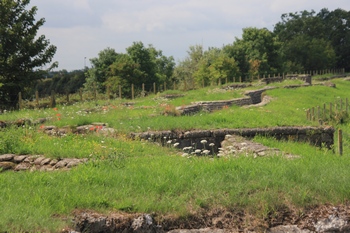
And just how could this tiny, nearly defeated country stand
up to the German war-engine? Simple: The Belgian army opened the dike
and flooded the area between the river Ijzer and the old rail-road in
Diksmijde. And there they sat, the Belgians on the side by the hill, and
the German army on the lower side, separated by the flood waters of the
River Ijzer. And there they would remain, playing cat and mouse, for the
remainder of the war.
Only once did the attitude of hatred that
so prevailed during those days change. It was Christmas Eve, 1914. Far
from home and missing their families, the German soldiers began singing
Christmas carols. It wasn't long before the Belgians joined in with
their own religious songs. Something broke in the hearts of the soldiers
that night, for on the next day, Christmas Day, instead of the usual
bullet exchange, chocolates and cigarettes could be seen sailing across
the icy Ijzer.
This display of good will even extended into the
day after Christmas, December 26th. At 2:30 in the afternoon, a German
officer named John William Anderson walked straight towards the Hoge
Brug, the only bridge separating the Germans from the Belgians. He had
his orderly with him, and he was carrying a golden receptacle. It was
the same vessel in which the Eucharistic host is carried during Belgian
processions. The Germans had found it in one of the abandoned cellars of
the Sisters of St. Vincent, and had confiscated it sometime earlier, but
now the German officer made it clear to the Belgian soldiers that he
wanted to return this prized possession to the Belgian people as a token
of reconciliation and peace. The vessel was then placed in a gunny sack
and pulled to the Belgian side via a rope.
Would peace finally
reign over this small region of Flanders, Belgium? Would forgiveness
become the priority of both sides?
It seemed that way for a
little while. But then someone started shooting and war resumed its
course. However, encouraged by the golden vessel, a commemoration of
Jesus' time on this planet, these soldiers briefly experienced the
miracle of forgiveness.
Christmas will do this to people.
Unfortunately we forget all too quickly the wonders of that day. More
often than not we find ourselves either feeling unforgiven, or in a
constant loop of unforgiveness: "He fired the first shot! He deserves to
be shot at!"
Our actions weigh on us, however, especially if
these actions result in people being hurt!
That's how a woman
felt when she was caught in adultery and brought before Jesus to be
stoned. This is what the customary verdict was in those days, and I can
just imagine her shivering is shame, regretting the decision that
brought her to the very doorsteps of execution. Everyone was eying her
with hatred, and the only words she could hear were: "Despicable!"
"Shameful!" "Sinner!" "She deserves to die!"
There was no
accusation from the mouth of Jesus, however. Instead He bent down and
began writing on the ground with His finger. When the angry mob pestered
Jesus for a reaction, He straightened up, and looking them directly in
the eye, He calmly stated: "If any one of you is without sin, let him be
the first to throw a stone at her." (John 8:7 NIV) Then he again lowered
himself to the ground and continued writing in the dirt.
I wonder
what he wrote on that day, for it certainly made an impact on the
woman's accusers! One by one they quickly left! And when Jesus finally
stood back up, he asked the accused woman: "Woman, where are they? Has
no one condemned you?" (John 8:10 NIV)
Shaking the woman
answered: "No one, sir." (John 8:11 NIV)
The woman would always
remember the amazing words that Jesus uttered next: "Then neither do I
condemn you. . . Go now and leave your life of sin." (John 8:11 NIV)
There is no condemnation in Christ! Our part is to simply go and
leave our lives of sin!
I wish these soldiers around the Ijzer
would have remembered that event in Jesus' life. The war would have been
over! But it's not too late for us. Will we accept Jesus' forgiveness?
No matter how horrible our actions have been in the past, Jesus is
willing to forgive. That's how great His love is towards each one of us!
Nothing will stop Him from loving us. Nothing!
What will be our
reaction towards such a love? Do we accept the forgiveness and forgive
in turn? Or do we prefer to take up our weapons and shoot at one another
again?
With this reaction, only one thing is guaranteed: Someone
will eventually fall!
What if that someone is you?
Rob
Chaffart
A Miracle in Time. Forgiven, Part 2
Today's Bible Verse:
"Then neither do I condemn you ... Go now and leave your life of
sin." (John 8:11)
A Miracle in Time. Forgiven, Part 2
Announcement:
Being forgiven is the reason why Jesus came to earth. We are forgiven! Let's celebrate what Jesus has done for us by forgiving others as well. This can be done on Christmas day or on any day of the year. Thank you Jesus!


- This mailing list is a public mailing list - anyone may join or leave, at any time.
-
This mailing list is announce-only.
This newsletter is dedicated to bringing people closer to the Lord through thought-provoking inspirational stories. It is published every Monday, Wednesday, Friday and Sunday.
Privacy Policy:
Our Privacy policy
We will never share, sell, or rent your individual personal information and email address with anyone without your advance permission or unless ordered by a court of law.
How can you stop receiving our newsletters?
Each newsletter sent contains an easy, automated way for you to cease receiving our newsletter. If you wish to do this, simply follow the instructions at the end of any newsletter.
If you have received unwanted, unsolicited email sent via this system or purporting to be sent via this system, please forward a copy of that email with your comments to webmaster@answers2prayer.org for review.