When Ireland was invaded by the Normans in 1169, they had no idea that
they would have to endure British rule for the next eight centuries.
English laws were soon enacted to strip them of their land as well as of
their unique cultural heritage, including their customs, language, laws
and religion. It was like they were being punished simply for being
Irish. People were unimportant in the face of the enforcement of British
law.
By the mid-16th century, the fertile lands in the Eastern
part of the island were beginning to be confiscated by the British. By
1691, about 80% of the land had been seized. The local people had no
choice but to move to Western Ireland, where the poorest farmland of the
country was located.
Penal laws followed the confiscation of the
land. Irish land could only be possessed by British landowners, and the
British bought up large portions of it. The Irish found themselves
without property of their own, and because it was a requirement to be a
landowner in order to vote, the people couldn't vote in their own
country.
The English landlords didn't have time to take care of
these large parcels of land, however, so they subdivided them into
smaller plots and rented them out to Irish tenants at exorbitant rates,
often renting to the very same people who had once owned and worked that
same land! These poor farmers had no choice but to pay the high rent
with the profits of their yearly harvest. They were literally enslaved
to their British landowners. Unfortunately, this didn't leave them
enough money to survive the year.
In order to survive, the Irish
needed to find an additional crop that could be grown even in the
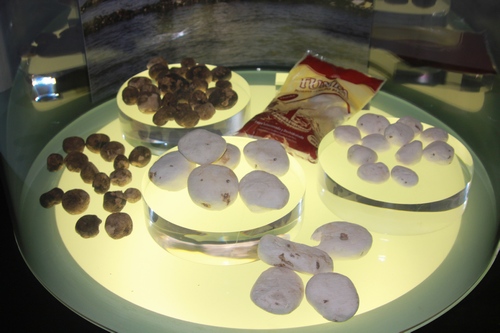
poorest soil. Potatoes to the rescue. There were no other alternatives,
and soon the people of Ireland found themselves living off of a diet
that centered around potatoes.
According to the foreign rulers,
the Irish people were only there to serve them. Law was more important
than the people themselves. Though this sounds terrible, we
unfortunately still find this mentality in our day and age, even in our
own culture. In some cases, people attend churches where doctrine is
more important than the people themselves. I have to ask myself: Where
is God's love in all of this?
How many people have I not
encountered that had been shunned by their own congregations because
they were considered "sinners" for not abiding by the rules of their
denomination? "No one is talking to me. My circumstances can't allow me
to abide by a certain rule. When I ask for help, they shrug their
shoulders and tell me: 'You have no faith!'"
I ask you again:
Where is God's love in all this? Where is the Christ who they proclaim
to worship?
The Pharisees were no better: "Caiaphas was the one
who had advised the Jewish leaders that it would be good if one man died
for the people." (John 18:14, NIV2)
Just like in our legalistic
denominations, just like in Ireland during British rule, people are not
important. They would rather crucify the Son of God in order to maintain
their own agenda of doctrines and regulations.
What does our
Father in Heaven think of this?
"Woe to you Pharisees, because
you give God a tenth of your mint, rue and all other kinds of garden
herbs, but you neglect justice and the love of God. You should have
practiced the latter without leaving the former undone." (Luke 11:42,
NIV2)
Where there is no love, there is no real worship.
"If anyone says, 'I love God,' yet hates his brother, he is a liar. For
anyone who does not love his brother, whom he has seen, cannot love God,
whom he has not seen." (1 John 4:20, NIV)
May we wake up from our
stupor and realize our own condition. Without love, we are truly filled
with emptiness. Only by really realizing the love from above can we
become pursuers of that same love.
By any chance do you have any
potatoes?
Rob Chaffart
Driven by Doctrines. Radioactive Religion, Part 4
Today's Bible Verse:
"Woe to you Pharisees, because you give God a tenth of your mint,
rue and all other kinds of garden herbs, but you neglect justice and the
love of God. You should have practiced the latter without leaving the
former undone." (Luke 11:42)
Driven by Doctrines. Radioactive Religion, Part 4
Announcement:
Are you frustrated with an ineffective prayer life? God does answer prayers, my friend. Why don't you come to Answers2Prayer and discover the power of prayer for yourself?


- This mailing list is a public mailing list - anyone may join or leave, at any time.
-
This mailing list is announce-only.
This newsletter is dedicated to bringing people closer to the Lord through thought-provoking inspirational stories. It is published every Monday, Wednesday, Friday and Sunday.
Privacy Policy:
Our Privacy policy
We will never share, sell, or rent your individual personal information and email address with anyone without your advance permission or unless ordered by a court of law.
How can you stop receiving our newsletters?
Each newsletter sent contains an easy, automated way for you to cease receiving our newsletter. If you wish to do this, simply follow the instructions at the end of any newsletter.
If you have received unwanted, unsolicited email sent via this system or purporting to be sent via this system, please forward a copy of that email with your comments to webmaster@answers2prayer.org for review.