When we think of a "battle", we generally think of the use of
traditional weapons, such as guns and bombs and knives. Some battles,
however, are quite different. Instead of traditional weapons, these
battles employ things such as cunning, deception, or even curses to
achieve their desired result.
Balak, king of Moab, resorted to
such tactics. He was "...terrified because there were so many people.
Indeed, Moab was filled with dread because of the Israelites." (Num 22:3
All quotes will be from the NIV)
Then a devilish idea came to his
mind, and he immediately summonsed Balaam. Now Balaam was considered to
be a prophet of God, and Balak knew that a curse from Balaam would be
all that was needed to destroy Israel forever. His request? "Now come
and put a curse on these people, because they are too powerful for me.
Perhaps then I will be able to defeat them and drive them out of the
country." (Num 22:6)
Interesting that Balak's goal was to defeat
Israel. It makes me think of someone else who wishes to defeat those who
worship God. Hmmmm. Just who might that be??? (See John 10:10)!
Though Balaam wasn't quite as righteous as Balak thought him to be, he
still insisted that the elders of Moab "spend the night here...and I
will bring you back the answer the LORD gives me." (Num 22:8).
The only problem was, the answer didn't come back the way Balak or his
men would have hoped. God's answer? "Do not go with them. You must not
put a curse on those people, because they are blessed." (Num 22:12)
Is anyone surprised? After all, how would WE respond if someone
approached us to ask if we would curse OUR own children? Even if they
were brats, our reaction would likely be a little less civilized than
God's ...
We can see Balaam's true character beginning to come
through in the words he spoke to the emissaries from Moab: "Go back to
your own country, for the LORD has refused to let me go with you." (Num
22:13). In other words, "It's God's fault!"
But Balak won't take
"no" for an answer. He returns to Balaam, not once or twice, but three
more times! And each time he tries to make the rewards for cursing
Israel a bit more enticing: "I will reward you handsomely ..." (Num
22:17)
I only know of one who tried to entice Jesus to sin on
three separate occasions. But that's another story.
Funny thing
is, each time Balak returns, Balaam continues to hang out with him. It's
like he hopes that he will be allowed to give that curse!
He did
learn his lesson however. Because it was obvious that Balaam wanted to
go and curse Israel, God gave in. He told him: "Since these men have
come to summon you, go with them, but do only what I tell you." (Num
22:20)
Balaam thought he had the upper hand here, but while on
the road towards Moah, the very next day, the improbable happened. Three
times "an angel of the Lord stood on the road to oppose him." (Num
22:22). Balaam couldn't see the angel, but the donkey he was riding sure
could. Either the donkey was motivated by fear, or he had more wisdom
that we would give him credit for, because each time the he refused to
move into the angel's territory. Once he ran into a field, once he
squashed Balaam's foot against the rock wall, and once he actually laid
down on the ground under his rider.
Balaam was far from pleased,
and he beat his donkey severely. It wasn't until the third time that the
donkey actually responded: "What have I done to you to make you beat me
these three times?" (Num 22:28)
Balaam must have been so angry
that he wasn't thinking right, for he actually answered his donkey: "You
have made a fool of me!" (Num 22:29) I don't think I would have gone so
far as to actually answer an animal who had spoken to me, but then, who
knows?
Some may be surprised by this turn of events. Why would
God allow Balaam to go, and then block his road with an angel? I believe
that the answer to this is that God chose to teach Balaam an important
lesson, and it is there, just after the donkey spoke, that Balaam began
to get the idea: Perhaps he was the one trying to make a fool of God by
seeking permission to curse the very people God had blessed!
The
angel's message was clear: "Why have you beaten your donkey these three
times? I have come here to oppose you because your path is a reckless
one before me. The donkey saw me and turned away from me these three
times. If she had not turned away, I would certainly have killed you by
now, but I would have spared her." (Num 22:32-33)
Now who was the
fool? Balaam was certainly grateful to his donkey for saving his life.
Maybe he should give the beast a carrot?
But the most important
lesson Balaam learned on that road was this: "I must speak only what God
puts in my mouth." (Num 22:38) And that is what he proceeded to do.
Three more times.
Just imagine how King Balak must have felt
after hearing the prophet, who was supposed to "curse" Israel, give them
a blessing instead! It wouldn't have surprised me if he had tried to
strangle Balaam with his very own hands! And this is the moment when
Balak reveals his true nature:
"I summoned you to curse my
enemies, but you have blessed them these three times. Now leave at once
and go home! I said I would reward you handsomely, but the LORD has kept
you from being rewarded." (Num 24:10-11). In other words, Balak, in
direct opposition to God, promised the reward, but when the desired
outcome didn't come, Balak blamed God. It's ALL God's fault!
The
persistence of Balak was geared against God Himself, and though he,
Balak, was to blame, he tried to blame God. Isn't it interesting how
Balak's tactics resemble those of the evil one himself!
But then,
if we hang around the devil too much, we may end up looking like him as
well!
The good news for any of us who have decided to follow God
is this: "If God is for us, who can be against us?" (Rom 8:31)
Hey...did I leave my donkey somewhere? After all he saved my life three
times! But shhhhhh! Don't tell anyone!
Rob Chaffart
The Battle of the Curse. Facing unimaginable Odds Series, part 6
Today's Bible Verse:
"You have made a fool of me!" (Num 22:29)
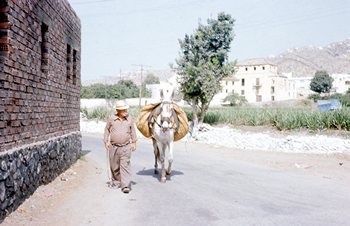
The Battle of the Curse. Facing unimaginable Odds Series, part 6
Announcement:
Do you have a Bible question you would like to see answered? Why not submit it to us. We have dedicated volunteers who would gladly take the time to find your answers.


- This mailing list is a public mailing list - anyone may join or leave, at any time.
-
This mailing list is announce-only.
This newsletter is dedicated to bringing people closer to the Lord through thought-provoking inspirational stories. It is published every Monday, Wednesday, Friday and Sunday.
Privacy Policy:
Our Privacy policy
We will never share, sell, or rent your individual personal information and email address with anyone without your advance permission or unless ordered by a court of law.
How can you stop receiving our newsletters?
Each newsletter sent contains an easy, automated way for you to cease receiving our newsletter. If you wish to do this, simply follow the instructions at the end of any newsletter.
If you have received unwanted, unsolicited email sent via this system or purporting to be sent via this system, please forward a copy of that email with your comments to webmaster@answers2prayer.org for review.